

Additional Information
| Product Name: | 6xHIS-RNF114 | ||
|---|---|---|---|
| Also Known As: | RING finger protein 114, Zinc finger protein 228, Zinc finger protein 313 | ||
| Catalog No.: | K2030 | ||
| Size: | 50 µg | ||
| Molecular Weight: | 28 kDa (with HIS tag) | ||
| Species: | Human | ||
| Source: | Bacterial recombinant | ||
| Stock: | 20 mM Tris, pH7.6 at 4 0C, 150 mM NaCl, 2 mM βME, 10% Glycerol. | ||
| Concentration: | See tube label | ||
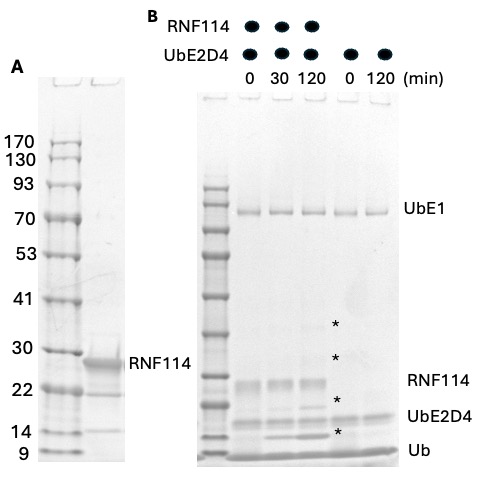
| Quality Assurance: | ~85% purity based on SDS-PAGE. Validated E3 ubiquitin ligase activity. | ||
| Storage: | Store at -80°C; avoid multiple freeze-thaw cycles | ||
| PDF Data Sheet: | PDF Datasheet; MSDS | ||
| NCBI RefSeq: | No | ||
| Image(s): | (Click image to enlarge)
|
||
| Shipping Method: | Dry ice shipping | ||
| References: | 1. Middleton A. J. and Day C. L., (2025) The EMBO Journal, 44, 5921-23. |
Details
RNF114 is a RING-type E3 ubiquitin ligase that regulates cell cycle progression, immune responses, and DNA damage repair. Serval substrates have been identified, including cyclin-dependent kinase inhibitors (such as p21, p27, and p57), A20 and PARP1. It is a binding target for small molecules (like nimbolide) with potentials in targeted protein degradation drug development.
Images:
(Click image to enlarge)
|
 |
